
Easy identification of violations
Quickly identify infractions
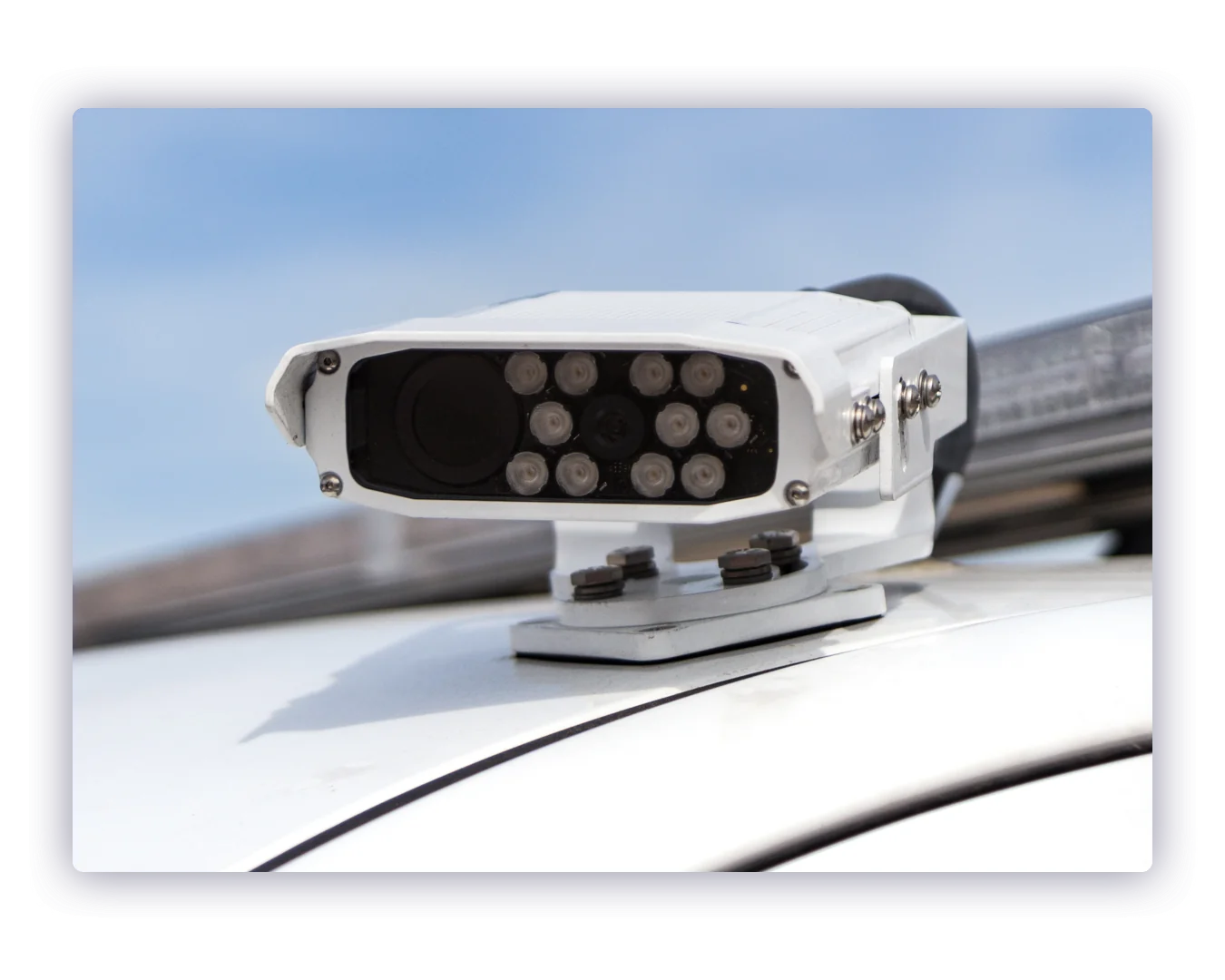
Advanced camera monitoring allows officers to focus on addressing violations rather than manually verifying compliant vehicles, while integration with handheld ticketing devices streamlines ticket issuance and prevents appeals. Our robust software solution simplifies identification of various infractions such as time-limit, permit, or scofflaw violations.
Quickly identify infractions

Reduce time spent on issuing citations

Automated process in verifying compliant vehicles


LPR parking enforcement uses license plate recognition cameras — mounted on vehicles, fixed to poles, or handheld — to automatically scan and identify license plates. The system cross-references plates against permit databases in real time, flagging violations so officers can issue citations faster and more accurately than manual patrols.
Fixed LPR cameras are mounted permanently at garage entrances, lot perimeters, or street infrastructure and capture plates continuously. Mobile LPR cameras are mounted on enforcement vehicles and scan plates as officers patrol. Handheld LPR devices give individual officers the same capability on foot. Most cities use a combination of all three.
ALPR stands for Automatic License Plate Recognition — the same technology as LPR, often used interchangeably. ALPR systems use optical character recognition to read license plates and match them against databases, enabling real-time permit verification, scofflaw identification, and automated citation workflows.
Passport's LPR enforcement integrations allow officers to scan up to 4,000 license plates per day. Plates are matched against permit and scofflaw databases in real time, enabling immediate citation issuance when a violation is detected.
Contact Passport Sales
Get in touch and a product specialist will get back to you shortly.
Talk to a Specialist