How Front-Line Enforcement Is Changing: What We Heard at Our Pacific Northwest Regional Webinar
On a Saturday this fall, Tyler Mitchell got an email telling him to shut off every LPR camera his department used. By Monday, Westminster’s mobile and fixed cameras were dark, and nobody knew if they’d come back on.
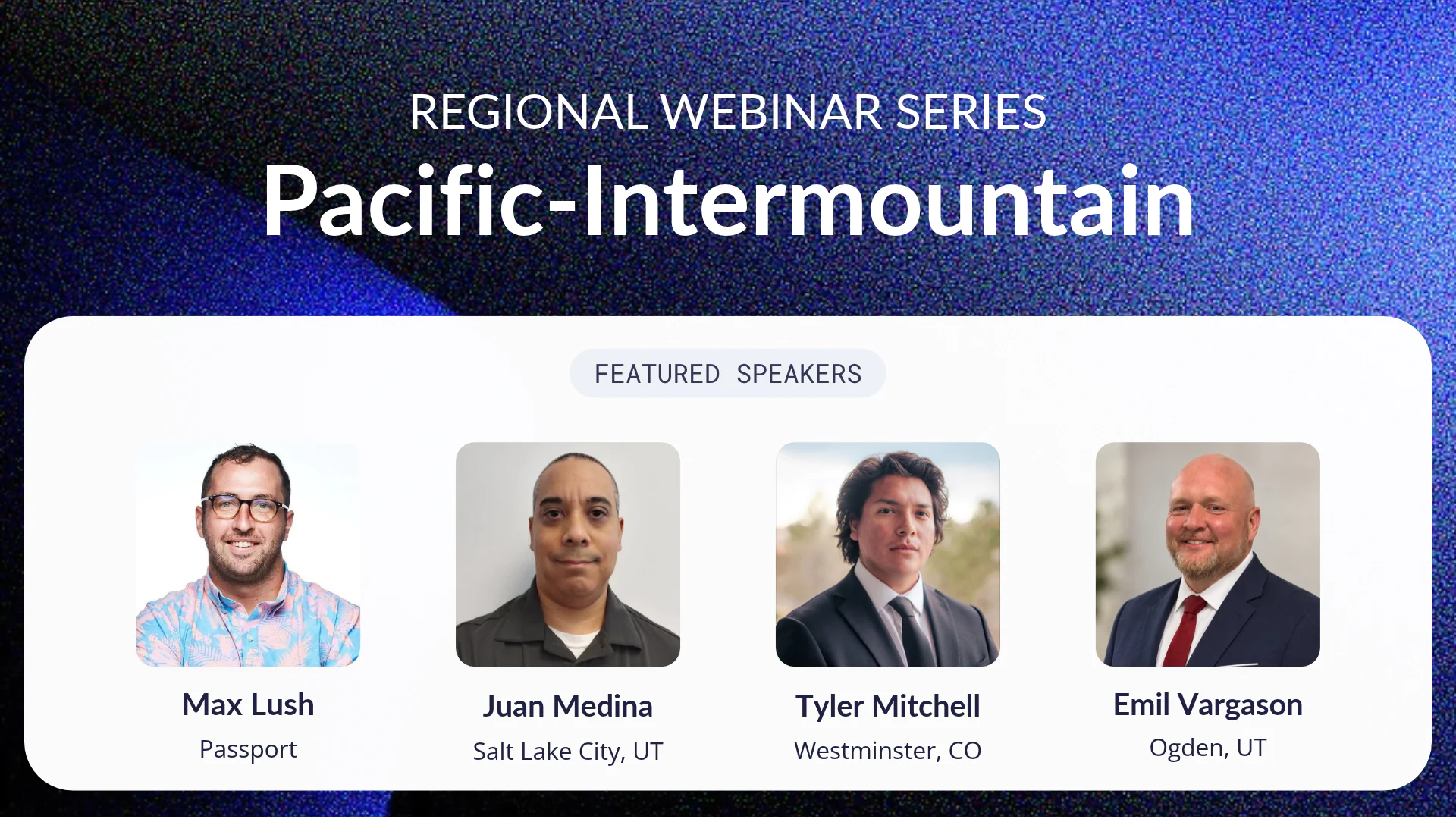
That story kicked off our latest Regional Webinar, held the week before the PIPTA (Pacific-Intermountain Parking & Transportation Association)’s annual conference. Max Lush, Account Executive at Passport, sat down with three city leaders to talk about how enforcement is changing on the front line: Tyler, Parking and Curbside Management Administrator for the City of Westminster, CO; Juan Medina, Parking Operations Manager for Salt Lake City; and Emil Vargason, Parking Operations Coordinator for Ogden City, UT.
Their programs couldn’t look more different. Ogden launched managed parking downtown in May. Westminster took over citywide enforcement from its police department in 2023 with half a staff position to cover it. Salt Lake City runs 17 officers across two shifts, seven days a week. But one idea came up again and again: the technology works. The hard part is the policy, the people, and the public trust around it.
You can watch the full recording here.
When council hits pause
Tyler’s cameras did come back on, and how he got there is a good playbook for any city.
He partnered with Westminster’s police chief to present to council together. The chief led by separating police LPR from parking LPR. Different purpose, different data, no connection between the two. Then Tyler explained exactly what his team captures: a plate photo and a timestamp. If it’s tied to a violation, it’s kept for about 30 days. If not, it’s gone by 9 a.m. the next day.
Council ended the police department’s LPR contracts but let parking keep its cameras. Tyler now checks in with council quarterly on retention and is drafting a one-pager so they have the facts on hand next time.
Salt Lake City and Ogden haven’t faced a pause, but the questions are coming. Juan’s team fields them every legislative session, even though their LPR helps police recover more than 150 stolen vehicles a year. Ogden is seeing more records requests asking who can see LPR data and how long it’s stored.
Juan offered a useful gut check here. When parking staff clock out, they’re members of the public too. If you’d want to know where your data goes, so do your residents.
Keeping officers safe
Juan has watched tension in the field rise since the pandemic, and several of his officers have faced physical confrontations on the job. Salt Lake City runs yearly de-escalation training with role playing, and officers know they can always walk away. A citation is never worth a fight.
Body cameras are Salt Lake’s next step, and Westminster has already made the jump. Tyler’s officers asked for them, and they’ve paid off. When a resident says they never got a tow notice, there’s footage tied to the citation number.
Tyler’s advice for cities considering body cams: think of it as a records project before a tech project. In Colorado, footage can be requested under open records law, with deadlines to respond. That meant working through retention rules, request handling, and staff responsibilities with IT and the city attorney before a single camera went live.
Ogden’s ambassadors are trained to disengage, never handle a tense situation alone, and escalate to the city or police when needed. A recent ride-along reminded Emil how quickly your heart rate climbs when you step out of the car to write a ticket.
Moving past the spreadsheet
Both Salt Lake City and Westminster used to dispatch calls from Excel. Salt Lake moved to software that pings officers’ phones with the location, vehicle, and issue, which cleared up a lot of radio traffic. Westminster uses a project management app for its 50 to 100 daily complaints, with photos and timestamps logged as officers close them out. Tyler also gets automated weekly reports from his back office and shares them with the city manager and council.
Emil is reading Ogden’s data closely to plan what’s next. Turnover on Historic 25th Street has improved, which businesses needed. Now parking is spreading to nearby streets, and transaction data is showing where the program may need to grow.
What’s next for each city
Westminster is hoping to add an officer next year, pending budget approval. Salt Lake City wants to keep bringing in new tools. And Ogden wants to move out of launch mode and start making decisions from utilization and compliance trends instead of reacting to individual complaints.
Their advice for newer programs was consistent. Lean on other cities, since this industry is quick to share. And before you sign a contract, map out how a new tool affects finance, IT, legal, and your own team. The more you plan up front, the fewer surprises you’ll have to explain to council later.
Want to hear it from the panel directly? Watch the full conversation here.
